
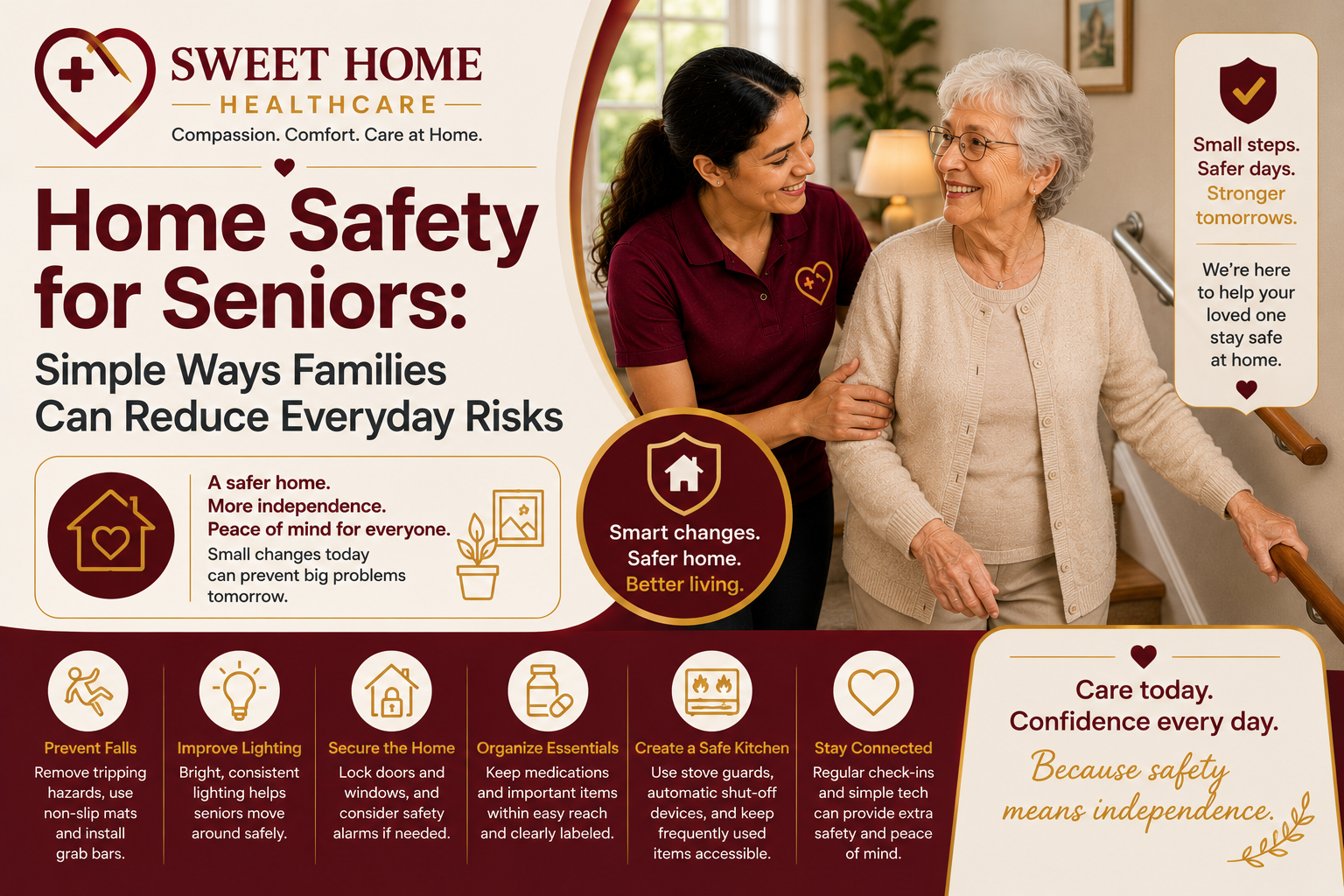
Home safety for seniors begins with small, practical changes that make everyday routines easier and reduce avoidable risks. Families can improve safety by clearing walkways, increasing lighting, organizing frequently used items, reviewing bathroom and kitchen routines, and keeping emergency contacts easy to reach. For seniors living in Caledonia, Simcoe, Port Dover, Dunnville, Jarvis, Cayuga and Haldimand County, a safer home environment can support greater comfort, confidence and independence while giving family members more peace of mind.
Why Home Safety Matters for Seniors
Many seniors want to remain in their own homes for as long as possible. Home is familiar, personal and connected to years of memories. However, a home that once felt easy to manage may become more difficult when mobility, vision, strength or daily routines change.
Everyday risks do not always come from major hazards. They are often linked to simple things such as poor lighting, cluttered walkways, loose rugs, hard-to-reach items or a bathroom that is difficult to use comfortably.
Families can reduce many of these risks by reviewing the home one room at a time. The goal is not to remove independence or make the home feel clinical. It is to create an environment that supports safer and more comfortable daily living.
Start With a Room-by-Room Home Safety Review
A home safety review does not have to be complicated. Walk through the home with your loved one and look at how they move, where they spend most of their time and which tasks seem difficult.
Pay attention to:
- Areas where your loved one moves slowly or hesitates
- Rooms that are poorly lit
- Items stored too high or too low
- Clutter around walkways
- Loose rugs, cords or small furniture
- Bathrooms and kitchens that require bending or reaching
- Frequently used items that are difficult to access
- Whether emergency contacts are easy to find
Involve the senior in the process whenever possible. Their comfort and preferences should guide any changes made in the home.
Home Safety Checklist for Seniors
| Area of the Home | What to Check | Simple Safety Improvement |
|---|---|---|
| Entrances and hallways | Clutter, poor lighting, loose mats and narrow pathways | Clear walkways, improve lighting and remove unstable items |
| Living room | Loose cords, low furniture and items placed in walking paths | Rearrange furniture and secure cords away from common routes |
| Bedroom | Difficulty reaching the light, clothing or frequently used items | Keep essentials nearby and make the route to the bathroom clear |
| Bathroom | Slippery surfaces, poor lighting and difficult entry or exit | Use non-slip surfaces and keep toiletries within easy reach |
| Kitchen | Heavy items, high shelves, poor food organization and clutter | Move frequently used items to accessible shelves and keep counters clear |
| Stairs | Poor lighting, loose objects and difficult handrail access | Keep steps clear, improve lighting and ensure handrails are easy to use |
| Emergency planning | Missing contact details or difficulty reaching a phone | Place emergency numbers in visible locations and keep a phone nearby |
Improve Lighting Throughout the Home
Good lighting helps seniors see obstacles, read labels and move more confidently around the home. A room may appear bright enough during the day but become difficult to navigate in the evening or at night.
Families should review:
- Hallways and entrances
- Stairways
- The route between the bedroom and bathroom
- Kitchen work areas
- Bathroom entrances
- Areas around chairs and beds
Make sure light switches are easy to reach. Nightlights may also help in hallways, bedrooms and bathrooms. Replace burned-out bulbs quickly and avoid leaving important areas dim.
Keep Walkways Clear and Organized
Clutter can make it harder for seniors to move comfortably through the home. Bags, shoes, laundry, electrical cords and small furniture may become obstacles, especially in narrow spaces.
Walkways should be wide enough for the person to move without stepping around objects. This is particularly important if they use a cane, walker or another mobility aid.
Helpful changes may include:
- Moving furniture away from common walking routes
- Keeping shoes and bags in one organized location
- Securing or relocating electrical cords
- Removing loose or curled rugs
- Keeping laundry and household items off the floor
- Reducing unnecessary furniture in crowded rooms
Light housekeeping support can help maintain clear walkways and prevent clutter from building up again.
Make the Bathroom Easier to Use
The bathroom deserves special attention because water, smooth surfaces and limited space can make movement more difficult.
Families should check whether the senior can comfortably enter and leave the bath or shower, reach toiletries, use the toilet and move around the room without rushing.
Simple improvements may include:
- Using non-slip surfaces
- Keeping the floor dry and clear
- Placing towels and toiletries within easy reach
- Improving lighting
- Removing unstable storage units
- Making sure the door can be opened easily
- Keeping frequently used personal care items organized
If the senior needs help with bathing, dressing or grooming, personal support care may make the routine more comfortable and organized.
Organize the Kitchen for Easier Daily Use
The kitchen is another area where reaching, lifting and standing can become tiring. Families can make it easier by placing frequently used items where they are simple to access.
Consider moving everyday dishes, cups, food items and light cookware to shelves between waist and shoulder height. Avoid storing frequently used items on very high shelves or near the floor.
Other practical steps include:
- Keeping counters clear
- Removing expired food regularly
- Using clearly labelled containers
- Keeping heavier items in accessible locations
- Organizing simple meals and snacks
- Cleaning spills promptly
- Keeping commonly used appliances easy to reach
Meal preparation support can help seniors who find cooking, kitchen cleanup or grocery organization difficult.
Create a Safer Bedroom Routine
The bedroom should be comfortable and easy to move around in, especially during the night. The route from the bed to the bathroom should remain clear.
Families should check that:
- A lamp or light switch is within easy reach
- The floor is free of clothing, shoes and cords
- The bed is comfortable to get in and out of
- Frequently used clothing is accessible
- A phone is nearby
- Glasses, hearing aids and other personal items have a regular location
A consistent evening routine can also reduce confusion. This may include preparing clothing for the next day, organizing personal items and making sure important pathways remain clear.
Review Stairways and Changes in Floor Level
Stairs and small changes in floor level can become harder to manage over time. Families should make sure steps are clear, well lit and easy to see.
Avoid leaving boxes, laundry or household items on the stairs. Check that handrails are secure and accessible. If the senior regularly hesitates or struggles on stairs, the family may need to reconsider how often they use different levels of the home.
Frequently used rooms and supplies may be moved to one main floor when practical. For more significant mobility concerns, seek guidance from an appropriate healthcare or home safety professional.
Keep Frequently Used Items Within Reach
Reaching high shelves, bending low or climbing on furniture can create unnecessary difficulty. Families can reduce this by reorganizing the home around the senior’s daily routine.
Keep commonly used items such as:
- Clothing
- Toiletries
- Kitchen supplies
- Medications
- Phones and chargers
- Remote controls
- Glasses and hearing aids
- Emergency contact information
in easy-to-reach locations. Avoid encouraging the senior to stand on stools or unstable furniture to reach stored items.
Create an Organized Medication Routine
Medication organization is part of overall home safety. Families should make sure the medication routine is based on instructions from healthcare professionals and that the information is clear and current.
Helpful steps may include:
- Keeping a written medication schedule
- Storing medication in its usual designated location
- Removing outdated instructions after confirming changes
- Making sure family members know who to contact with questions
- Using non-medical reminder support when needed
A non-medical caregiver may remind a client to follow an existing medication schedule. They do not prescribe medication, change instructions or provide medical advice.
Support Consistent Meals and Hydration
Home safety also includes maintaining regular daily routines. A senior who skips meals, forgets to drink water or finds cooking difficult may need practical support.
Families can help by:
- Keeping simple meals and snacks available
- Organizing the refrigerator and pantry
- Removing expired food
- Keeping water or preferred drinks easy to reach
- Creating a regular meal schedule
- Arranging meal preparation support when needed
For medical diets or special nutrition concerns, families should follow guidance from a qualified healthcare professional.
Make Emergency Information Easy to Find
Emergency contact information should be easy for the senior, family members and caregivers to locate. Avoid keeping important details only on one person’s phone.
Consider displaying a simple contact sheet that includes:
- Primary family contact
- Secondary family contact
- Healthcare provider information
- Preferred pharmacy
- Relevant service providers
- The home address
- Important instructions already agreed upon by the family
Keep a phone within easy reach in the rooms where the senior spends the most time. Make sure they know how to use it and that it remains charged.
Watch for Changes in Daily Routine
A home may be physically organized but still become difficult to manage if the senior’s abilities or routine change. Families should pay attention to small signs that more support may be needed.
These signs may include:
- More clutter than usual
- Meals being skipped
- Difficulty changing clothes or maintaining hygiene
- Unopened mail or unfinished household tasks
- Increased hesitation when moving around the home
- Frequently misplaced items
- Reduced social interaction
- Family caregivers becoming overwhelmed
These changes do not always mean the person must move. They may indicate that a personalized home care plan could help with specific routines.
How Home Care Can Support a Safer Environment
Non-medical home care can help families maintain many of the routines connected to home safety. Depending on the care plan, a caregiver may assist with:
- Light housekeeping and clutter reduction
- Meal preparation and kitchen cleanup
- Personal support with bathing and dressing
- Medication reminders
- Companionship and regular check-ins
- Keeping frequently used areas organized
- Communicating concerns to family members
- Evening or overnight reassurance
A caregiver does not replace a contractor, deep-cleaning service, medical professional or formal home safety assessor. However, regular support can help maintain a more organized and comfortable daily environment.
Simple Weekly Home Safety Routine
| Frequency | Suggested Check | Who May Help |
|---|---|---|
| Daily | Clear walkways, clean spills and keep essential items within reach | Senior, family member or caregiver |
| Several times per week | Review meals, hydration, dishes and household clutter | Family member or home care provider |
| Weekly | Check laundry, linens, bathroom supplies and food organization | Family member or caregiver |
| Monthly | Review lighting, cords, rugs, emergency contacts and frequently used storage | Family member |
| When needs change | Review the full home setup and care plan | Family, home care provider and relevant professionals |
How to Discuss Home Safety Without Taking Over
Some seniors may feel criticized when family members suggest changes in the home. They may worry that the discussion will lead to losing independence or being forced to move.
Approach the conversation with respect. Focus on making routines easier rather than pointing out everything that is wrong.
You might say:
- “Can we move these items so the hallway is easier to use?”
- “Would it help to keep your everyday dishes on a lower shelf?”
- “What would make the bathroom more comfortable for you?”
- “Could we arrange some help with the tasks that feel tiring?”
Ask for your loved one’s opinion and make changes gradually. A home should still feel like their personal space.
When to Request Additional Support
Families may need outside support when home safety improvements are not enough on their own. A senior may have a tidy and organized home but still need help with personal care, meals, mobility routines or overnight reassurance.
Consider requesting home care when your loved one:
- Needs regular help with daily routines
- Cannot maintain meals and housekeeping consistently
- Spends long periods alone
- Needs reminders throughout the day
- Feels uncertain during evenings or nights
- Depends heavily on one family caregiver
- Has recently returned home after illness
A consultation can help the family identify which tasks require support and how often care may be needed.
Choosing Home Care Support in Caledonia
When choosing home care in Caledonia, families should look for a provider that values dignity, communication and personalized care planning. The provider should understand which daily routines have become difficult and explain how caregivers can help without taking unnecessary control away from the client.
SweetHome Health Care supports families in Caledonia and nearby communities, including Simcoe, Port Dover, Dunnville, Jarvis, Cayuga and Haldimand County. Services may include personal support, companionship, medication reminders, meal preparation, light housekeeping, respite care, overnight assistance and custom care plans.
Frequently Asked Questions About Home Safety for Seniors
What are the most common safety concerns for seniors at home?
Common concerns include poor lighting, cluttered walkways, loose rugs, difficult-to-reach items, slippery bathroom surfaces and inconsistent meal or medication routines.
How can families make a senior’s home safer?
Families can clear walkways, improve lighting, organize frequently used items, reduce clutter, review bathroom and kitchen routines, and keep emergency contacts easy to reach.
Should all rugs be removed from a senior’s home?
Loose, curled or unstable rugs may create difficulties. Families should review each rug and remove or secure items that do not stay flat and stable.
Can home care help improve home safety?
Home care can support light housekeeping, meals, personal routines, reminders and family communication. It does not replace professional repairs, deep cleaning, clinical care or a formal home safety assessment.
How often should families review home safety?
Families should perform simple checks regularly and complete a broader review whenever the senior’s mobility, routine, health needs or living situation changes.
What should families do when a senior refuses home changes?
Approach the conversation respectfully, involve the senior in decisions and introduce changes gradually. Focus on comfort and independence rather than control.
Does SweetHome Health Care support seniors outside Caledonia?
SweetHome Health Care supports families in Caledonia and nearby communities, including Simcoe, Port Dover, Dunnville, Jarvis, Cayuga and Haldimand County.
Request Support for Safer Daily Routines at Home
If your loved one is finding household routines, meals, personal care or daily organization more difficult, SweetHome Health Care can help create a personalized support plan. Care may include light housekeeping, meal preparation, medication reminders, companionship, personal support, respite care or overnight assistance.
Request care, call SweetHome Health Care or book a consultation to discuss home care support for seniors in Caledonia and nearby communities.
